Tire rotation sounds like the simplest service on the Shelby schedule: take the tires off, move them around, put them back. The part nobody explains is that the around has a pattern, the pattern depends on which wheels drive the car, and choosing the wrong one quietly re-creates the uneven wear rotation exists to prevent.
This decision guide lays out the real options the way a counter conversation at Ruano's Tire Shop runs: find your drive layout, find your tire type, and the pattern follows. The interval question and the odd cases, staggered sizes, directional tires, and the full-size spare, get their answers along the way.
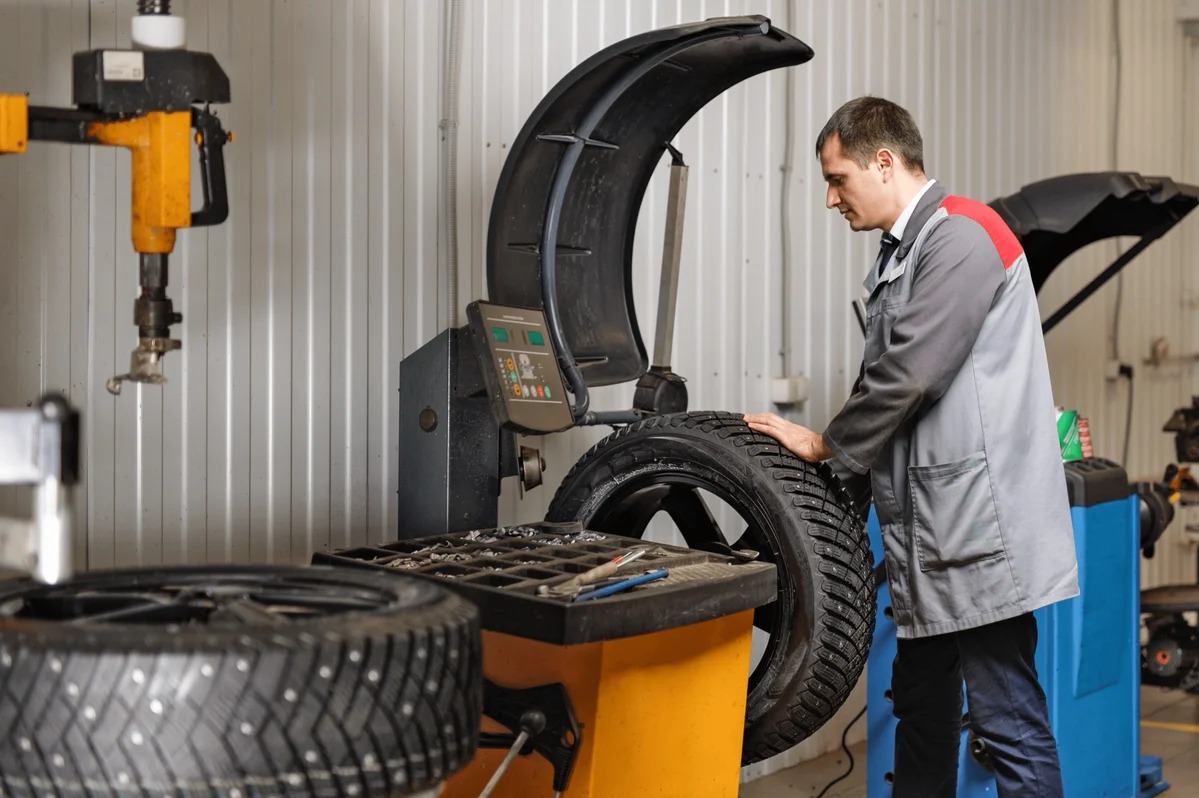
Why the front tires live a harder life
On most cars the front axle steers, carries the engine's weight, and does the majority of braking. On front-wheel-drive cars it also does all the driving, stacking every wear force on the same pair. Left in place, front tires reach the wear bars while the rears still hold serviceable depth, and the car ends up with the exact split set that causes arguments at replacement time.
Rotation is the scheduled redistribution of that work. Moving each tire through other positions over the set's life evens the depth across all four, keeps wet grip balanced between axles, and lets a technician read wear patterns while they are still small stories instead of finished ones. The cadence most manufacturers and shops work to is every 5,000 to 8,000 miles, a range that conveniently lands near oil-change rhythm for many drivers.
| Your car | Pattern | What moves where |
|---|---|---|
| Front-wheel drive | Forward cross | Fronts go straight back; rears cross to the front |
| Rear-wheel or four-wheel drive | Rearward cross | Rears go straight forward; fronts cross to the rear |
| All-wheel drive | Rearward cross | Same cross pattern; keep all four depths close |
| Directional tires | Front-to-back, same side | Arrows must keep pointing forward; no crossing without remounting |
| Staggered sizes | Front-to-back only if sizes allow | Wider rears cannot move to the front axle |
| Matching full-size spare | Five-tire rotation | Spare joins a rear slot; one tire rests each rotation |
The patterns, by drive layout
Front-wheel drive uses a forward cross: the front tires move straight back, and the rear tires cross to opposite front corners. The crossing matters, because it puts each rear tire on the steering axle in a fresh orientation and reverses the subtle wear direction the rear position developed. Rear-wheel and four-wheel drive reverse the logic: the rear tires move straight forward, and the front tires cross to opposite rear corners.
All-wheel drive generally follows the rearward-cross pattern as well, with the standing note that all four tires on an AWD vehicle need to stay close in depth, which rotations protect. Two patterns limit the options for everyone: directional tires, marked with a rotation arrow, can only move front to back on the same side unless they are remounted, and staggered sets with wider rears cannot swap axles at all. Neither case cancels rotation; it just narrows the menu to front-to-back swaps.
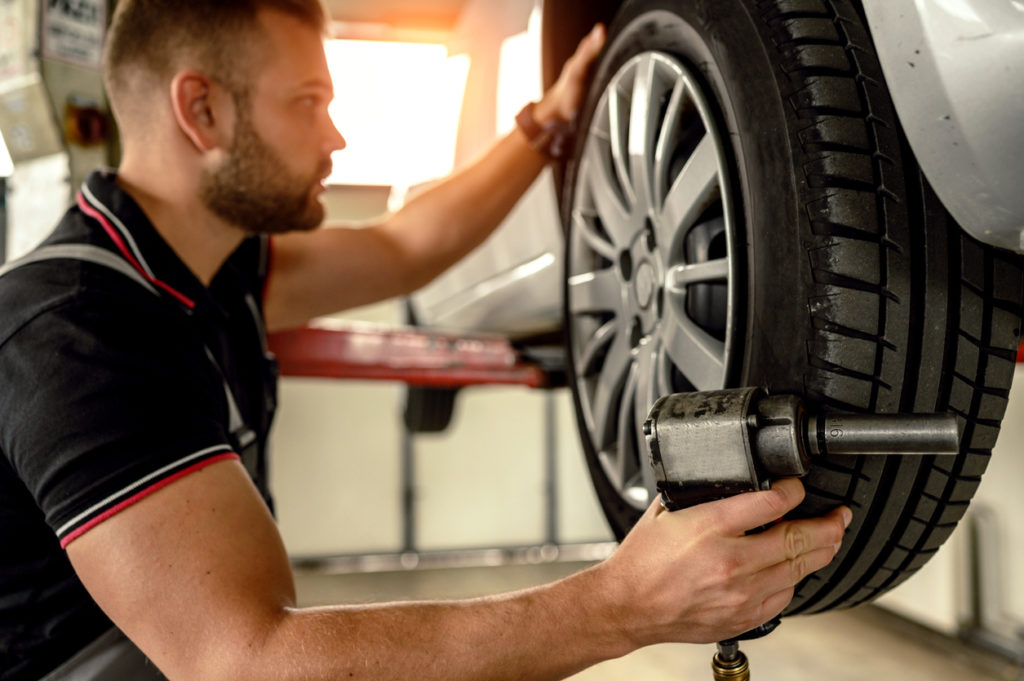
The fifth tire and the decision at the counter
A matching full-size spare can join the rotation in a five-tire pattern, which spreads wear across five tires, extends the set's total life, and keeps the spare from aging unused in the well. The pattern runs the spare into a rear position and cycles one tire out to rest each time. It only works when the spare truly matches in size and type and the wheel fits all positions; a donut earns nothing but its twice-yearly pressure check.
So the counter decision is a short sequence. Name the drive layout, check for directional arrows and staggered sizes, decide whether the spare joins, and the pattern is determined, not debated. Write the pattern and the mileage on the receipt, and the next rotation, whoever does it, can keep the set in sequence. That record is a small thing until you are standing in a different shop in a different town, trying to reconstruct the order from memory.
Common questions
How often should I rotate my tires?
Every 5,000 to 8,000 miles is the common guidance, and harder front-wheel-drive wear argues for the shorter end. Pairing rotations with another service makes them happen.
Can I rotate tires myself at home?
You can, with a proper jack, stands, and a torque wrench for the lug nuts. The pattern matters more than the venue, and a shop rotation includes a wear and brake look you will not get in the driveway.
What happens if I skip rotations entirely?
The front pair wears out early, the set stops matching, and you inherit the two-tire replacement problem along with its placement rules. Rotation is the cheaper path.
Photos in this guide are representative stock images.
← All guides from Ruano's Tire Shop← Back to Ruano's Tire Shop