Here is the Shelby version of a scene played out in every tire shop: two tires are worn, two are fine, the driver can cover a pair today, and the instinct in the room says the new rubber belongs up front with the steering. The technician says rear. Both people are being sensible. Only one of them is right, and the way to settle it is to troubleshoot from the emergency outward instead of from the steering wheel inward.
The emergency that matters is loss of grip on a wet road, the kind Cleveland County serves up in every summer thunderstorm. Diagnose which end of the car loses grip, what each loss feels like, and what an ordinary driver can do about it, and the placement stops being a matter of opinion.
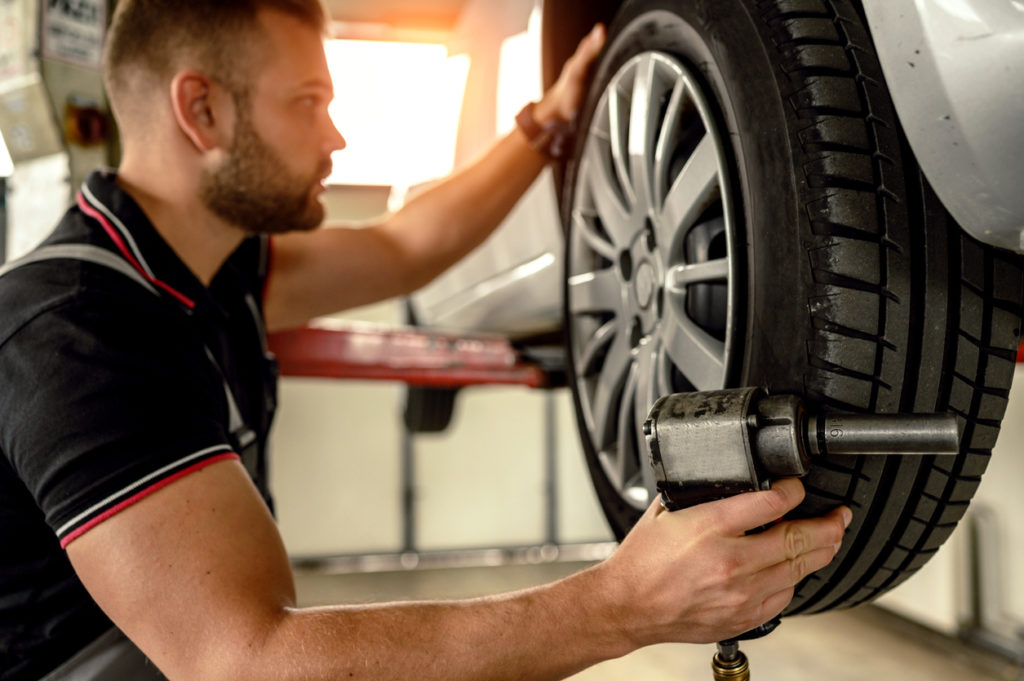
Symptom one: the front lets go
Picture the front tires running out of grip in a wet curve. The car stops answering the wheel and pushes straight, a slide called understeer. It is frightening the first time, and it is also the forgiving kind: easing off the throttle and gently unwinding the steering lets the tires bite again, and that reaction is what most drivers do by instinct anyway. Cars are even tuned to prefer this behavior, because it corrects itself in untrained hands.
Depth is what postpones that moment. Front tires with good tread channel water and hold the line at speeds where a worn pair starts to float. So the instinct to protect the front is not foolish; it is just aimed at the slide that is easier to survive. Keep diagnosing before you decide.
- Reproduce the choice: two tires worn, two serviceable, budget for a pair today.
- Diagnose the front slide: understeer plows straight, responds to lifting off and unwinding the wheel.
- Diagnose the rear slide: oversteer rotates the car, demands trained correction, and usually ends the argument.
- Assign the grip: the deeper tread goes to the rear axle so the catchable slide happens first.
- Mount the new pair on the rear, move the best older pair forward, balance, and set placard pressures.
- Find the root cause of the uneven wear, then set a rotation reminder so the set ages together.
Symptom two: the rear lets go
Now the rear tires lose grip first. The back of the car swings out and the car begins to rotate, and the correction is a trained skill: look where you want to go, steer into the slide, and meter the throttle, all in about a second, all opposite to panic. Get it wrong and the spin completes itself. This slide, oversteer, is the one that puts cars backward into ditches on wet Shelby roads.
Because the rear slide is the unrecoverable one for most drivers, the system is arranged to prevent it: the axle with the deeper tread goes at the back, so the front reaches its limit first and gives the driver the catchable slide. That is the whole rule, and it holds on front-wheel-drive cars too, where every instinct says the driven, steering end should get the new tires. The tires at Ruano's Tire Shop go on the rear in a two-tire replacement for exactly this reason.
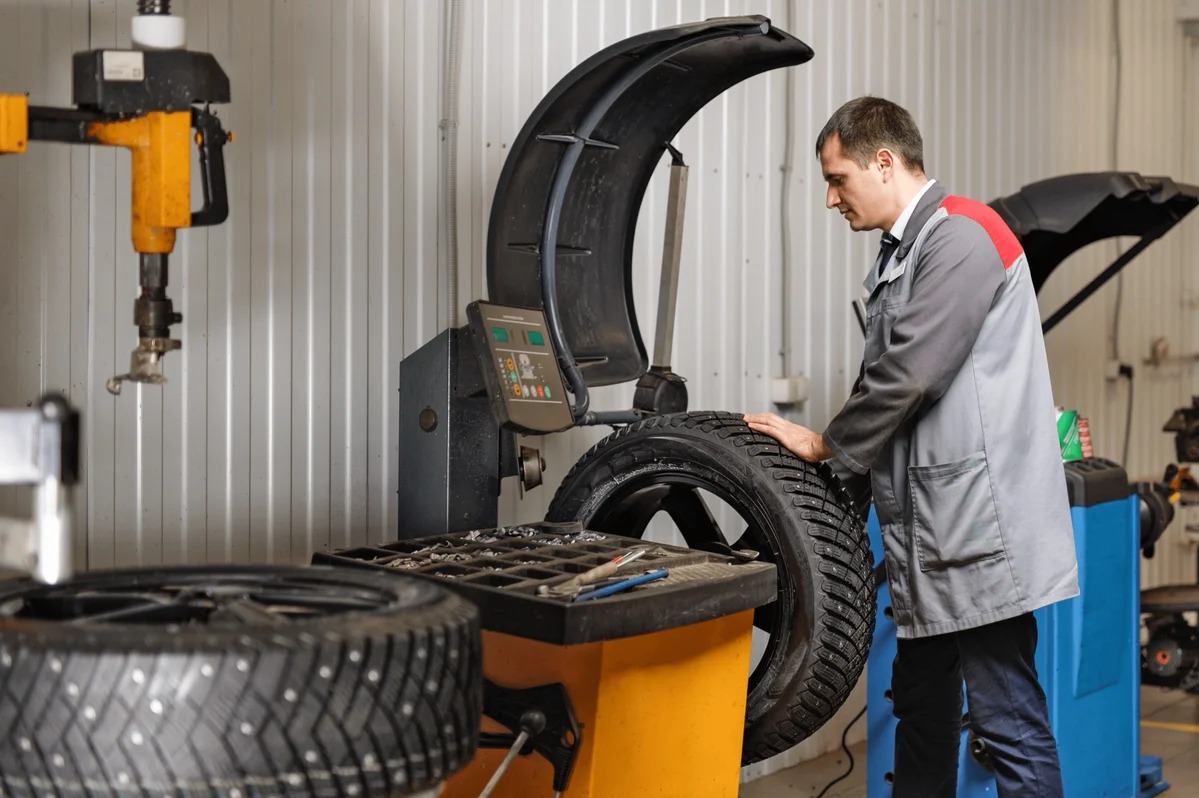
The fix, done in order
With the diagnosis settled, the repair is mechanical: the new pair mounts on the rear, the best of the old tires move to the front, and everything gets balanced and set to placard pressure. Then comes the step drivers skip, asking why one pair died early. Uneven wear between axles usually traces to rotations that never happened, and sometimes to alignment drift or a pressure habit that favored one end of the car.
Close the loop with a rotation schedule, commonly every 5,000 to 8,000 miles, so the next set wears as a set of four and reaches replacement together. A matched set at even depth is better than any two-and-two arrangement, in the wet most of all. The front-or-back rule is the correct answer to a problem the rotation habit exists to prevent, and knowing both is the difference between a driver who got lucky and one who does not need to.
Common questions
My front tires do the steering and braking. Why starve them?
They are not starved; they get the better of the old pair and full pressure. The rule only decides where the deepest tread lives, and the rear needs it more because its slide is the uncatchable one.
Does the rule change for rear-wheel drive?
No. Driven wheels change how a car accelerates, not which slide a driver can recover from. The new pair goes on the rear for every drive layout.
What if all four are worn but the rear pair is worse?
Then the set is telling you it is time for four. Two new on the rear still applies if a pair is truly all the budget allows, with a dated plan for the front pair.
Photos in this guide are representative stock images.
← All guides from Ruano's Tire Shop← Back to Ruano's Tire Shop